Naps Without the Guilt or the Grogginess
Some people feel better after a short rest and others feel worse. We look at general ideas about timing, length and setting so a nap feels like help, not a setback.
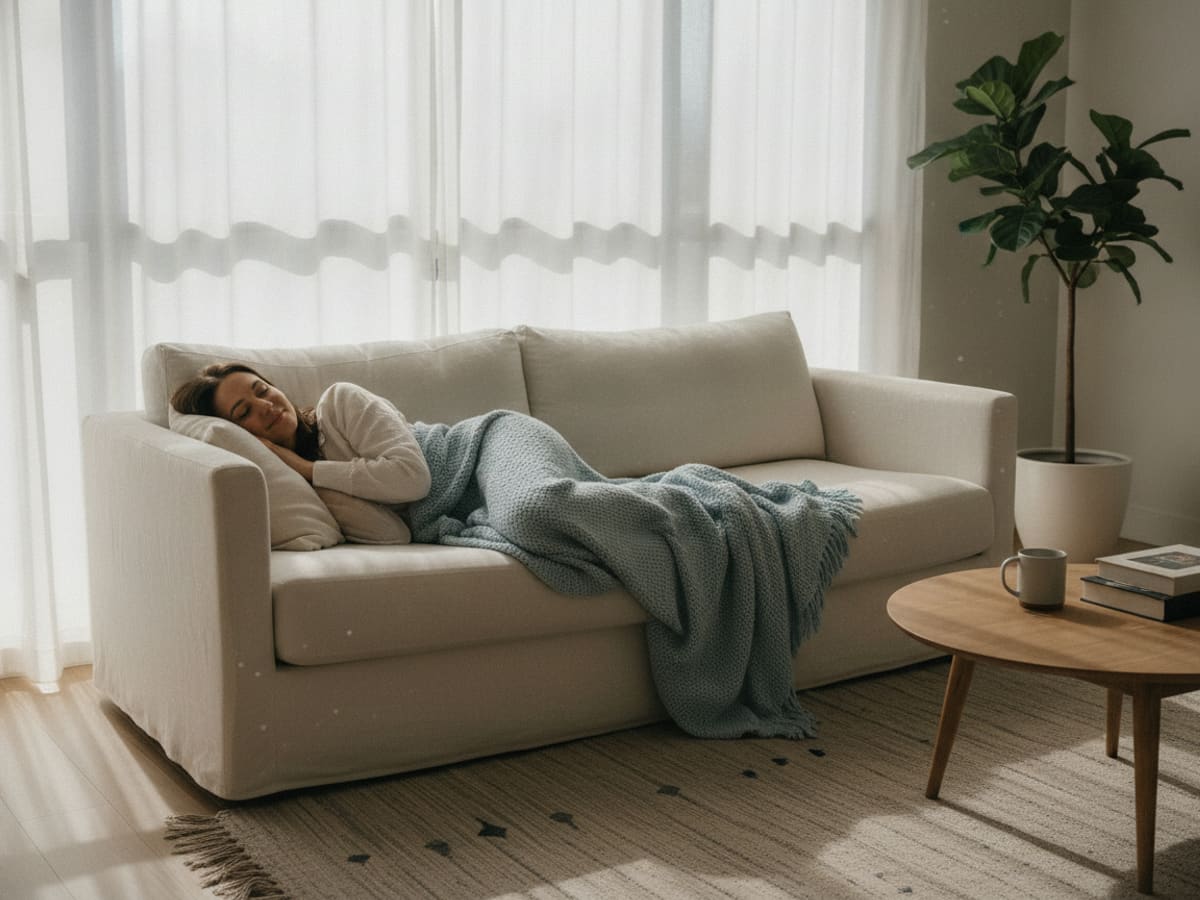
Yes, it's okay to nap in the afternoon. For many people, a short rest is a perfectly reasonable way to get through a stretch of the day when energy dips. The goal isn't to earn a nap or apologize for one. It's to keep it small and well-timed so you wake up feeling a bit clearer, not foggy.
Why afternoons can feel heavy
That mid-afternoon slump is common, and it isn't a character flaw. Your body runs on a daily rhythm, and for most people there's a natural dip in alertness in the early to middle afternoon, whether or not you ate lunch.
A few everyday things can make the dip feel steeper:
- A short or interrupted night of sleep
- A big, rich meal at midday
- Long stretches of sitting still, especially in a warm room
- Hours of screen time or focused work without a break
- Stress or a packed morning that left you running on adrenaline
Knowing the dip is normal can take some of the guilt out of it. Feeling sleepy at 2:30 doesn't mean you're lazy. It often means you're a person with a body clock.
Short rests versus long ones
Not all naps are the same. The main thing to know is that length matters.
A short nap, roughly 15 to 25 minutes, usually keeps you in lighter sleep. Many people wake from that feeling refreshed and ready to get back to things. Even lying down with your eyes closed and not quite falling asleep can feel restful.
A longer nap can carry you into deeper sleep. If you wake from that, you may feel heavy, confused, or out of sorts for a while. That groggy feeling is the one most people are trying to avoid. A long nap can also make it harder to fall asleep at bedtime, which can start a cycle of poor nights and sleepy afternoons.
Timing plays a part too. Earlier in the afternoon tends to work better than late in the day. If you nap close to evening, you may find bedtime slips later than you'd like.
That said, bodies differ. Some people nap longer and feel fine, and some can't nap at all without feeling worse. Try a few versions and notice what works for you.
Finding a spot and a signal that says stop
You don't need a perfect setup. You need a spot that's comfortable enough to rest and a clear way to end the nap so you're not guessing.
Here's a simple routine to try this week:
- Pick a spot that's quiet and fairly dim. A couch, a bed with the covers left on, a reclined chair, or even a parked car in a safe place can all work.
- Loosen anything tight, like a belt or shoes, and grab a light layer, since your body temperature can drop as you rest.
- Silence notifications, or put your phone out of arm's reach but within hearing distance of an alarm.
- Set a gentle alarm for the length you've chosen, plus a few minutes to settle in.
- Close your eyes and let your breathing slow. If you don't fall asleep, that's fine. Resting counts.
- When the alarm goes off, get up fairly soon. Open the blinds, drink some water, and move around for a minute or two.
A "stop" signal doesn't have to be a phone. Some people nap in a spot where the afternoon light shifts, or ask a family member to knock on the door. What matters is that it's decided ahead of time, so you can relax without worrying you'll sleep through the rest of the day.
What a nap can't make up for
A nap is a helpful pause. It isn't a full replacement for a night of sleep, and it won't cancel out a pattern of going to bed very late or waking often.
If you find yourself relying on a long nap every day just to function, that's worth paying attention to. It may be a sign that nighttime sleep needs some attention, such as a more regular bedtime, a darker and cooler bedroom, or a calmer wind-down hour.
A nap also can't fix the other things that drain energy. If you're skipping meals, drinking little water, or sitting for hours, a short walk, a snack with some substance, or a glass of water may do more for your afternoon than extra sleep. And if you're carrying a lot of stress, a nap might give you a moment of relief, but it won't make the stress go away. It can still be a kind thing to do for yourself while you work out what else might help.
When ongoing tiredness deserves a conversation with a professional
Everyone has tired days. But tiredness that sticks around is different, and it's worth taking seriously rather than pushing through or napping around it.
Consider checking in with a doctor if you notice:
- Feeling worn out most days even after what seems like enough sleep
- Falling asleep unintentionally during activities like reading, meetings, or conversations
- Loud snoring, or waking up gasping or with a dry mouth or headache
- Needing long naps regularly just to get through the day
- Tiredness along with other changes, such as mood shifts, changes in appetite, or things that feel unusual for you
In the meantime, you can keep the practice simple. Try one short, early-afternoon rest this week, pick your stop signal, and see how you feel when you get up. Small adjustments, made at your own pace, are often enough to show you what your body is asking for.